The Reveal Effect: How Beauty Brands Are Engineering Unboxing Sequences to Convert Buyers Into Loyalists
There is a specific kind of anticipation that builds in the seconds between picking up a package and seeing what is inside. For beauty consumers, that window is not merely functional — it is emotional, neurological, and increasingly, commercial. The brands that understand this are not simply packaging their products; they are choreographing experiences designed to produce measurable outcomes: stronger purchase intent, higher lifetime value, and content that travels across social platforms without a single dollar spent on paid distribution.
Unboxing psychology is no longer a fringe concept discussed in consumer behavior journals. It has become a central pillar of brand strategy for beauty companies operating across every price tier, from mass-market skincare to ultra-luxury fragrance houses.
Why the Brain Responds So Strongly to Sequential Reveals
At the neurological level, the unboxing sequence activates the brain's reward circuitry in a pattern remarkably similar to other anticipation-reward loops. Dopamine — the neurotransmitter most associated with motivation and pleasure — does not spike at the moment of reward. It spikes during the anticipation of reward. This distinction is critical for packaging designers.
When a consumer must work through multiple layers — an outer shipping box, a branded inner box, tissue paper, a ribbon pull, a product sleeve — each transition functions as a micro-reward that refreshes the dopamine cycle. The cumulative effect is a heightened emotional state at the moment the product itself is revealed. That emotional peak is what gets remembered, and what gets filmed.
Beauty brands that collapse this sequence into a single step — product in a plain box, done — are forfeiting a neurological advantage that costs relatively little to design in but pays dividends across customer retention and earned media.
Layering as a Design Language
The most effective unboxing sequences treat each layer as a distinct communication moment rather than mere protective material. Consider how this plays out in practice.
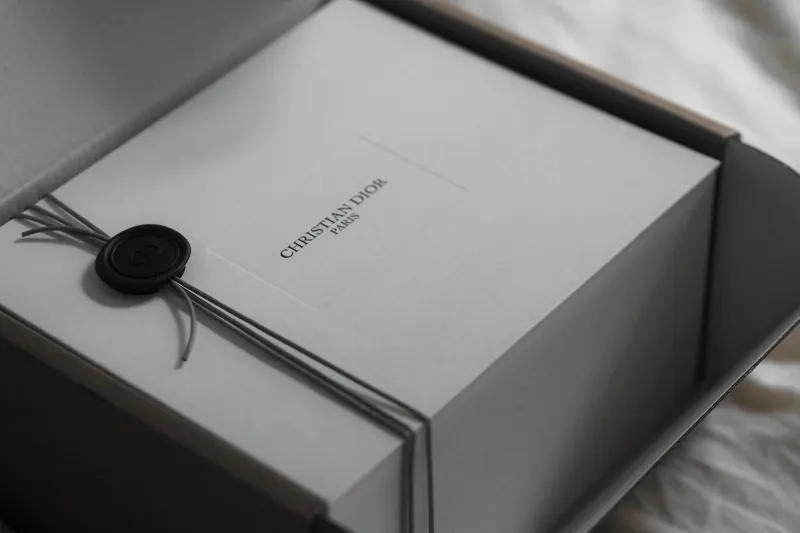
The outer surface of a box establishes brand recognition and sets tonal expectations. A matte black exterior signals restraint and luxury. A kraft paper finish communicates sustainability and authenticity. A high-gloss white surface with embossed typography positions the brand in accessible prestige territory. Before the box is even opened, the consumer has received a brand message.
The interior lid — often the first surface revealed when a box is opened — functions as a second first impression. Brands like Glossier have used this real estate for affirmations or playful copy that immediately shifts the consumer's emotional register toward warmth and community. Other brands deploy a brand color reveal at this point, using the interior color contrast to create a visual surprise that photographs well and feels intentional.
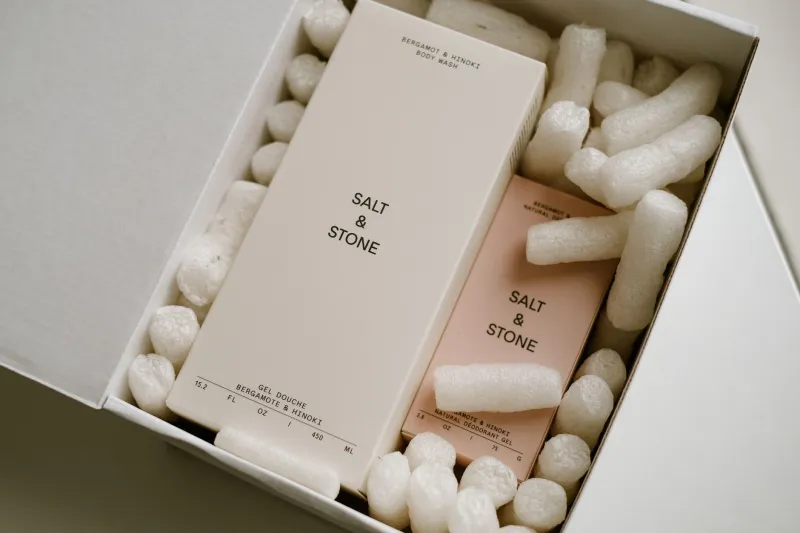
The product nest — how items are physically arranged and cradled — communicates care and craftsmanship. Crinkle paper, custom-cut foam, satin pouches, and molded pulp inserts all carry different brand signals. Crinkle paper reads as celebratory and accessible. Molded pulp reads as premium and environmentally conscious. Satin pouches imply gift-worthiness. The choice should align with the brand's positioning, not simply with what is cheapest to source.
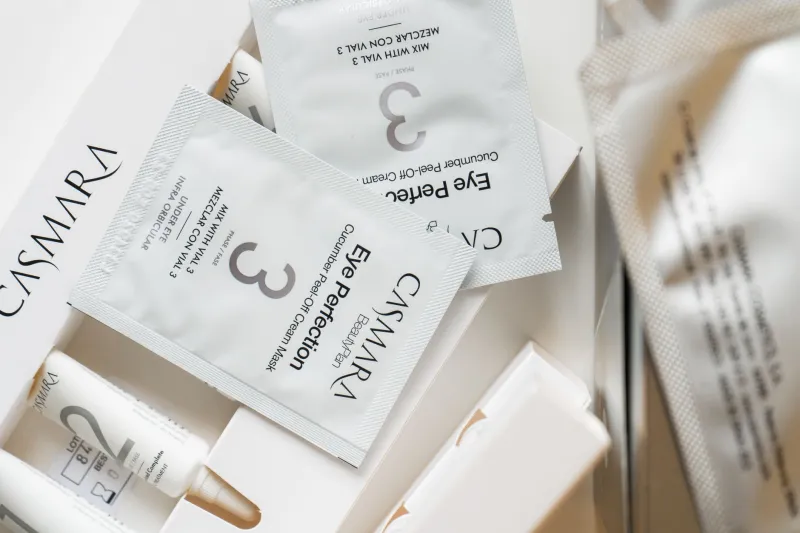
Finally, inserts — cards, samples, handwritten notes, or QR codes linking to tutorials — extend the experience beyond the physical unboxing and create an additional touchpoint that can drive both retention and conversion on adjacent products.
Personalization as a Conversion Multiplier
The psychology of personalization in packaging operates on a straightforward principle: people assign higher value to objects that feel made for them specifically. For beauty brands, this creates a meaningful opportunity to increase perceived product value without changing the formulation.
Personalization does not require individual customization at scale — which remains cost-prohibitive for most brands. Instead, it can be achieved through segmented packaging that speaks to different consumer identities, seasonal or limited-edition packaging that creates temporal exclusivity, or name personalization at the packing stage for direct-to-consumer orders.
Fenty Beauty has demonstrated how color-inclusive product presentation — ensuring that shade ranges are displayed in ways that feel inclusive rather than hierarchical — functions as a form of identity personalization. When a consumer sees their undertone represented prominently in the visual language of the packaging, the brand has communicated recognition without printing a single name.
Subscription beauty brands operating in the US market, including Ipsy and Birchbox at their peak, built entire loyalty models on the premise that a curated box felt personal even when it was algorithmically assembled. The physical packaging — the bag, the tissue, the card — carried the emotional weight of that personalization signal.
The Social Sharing Feedback Loop
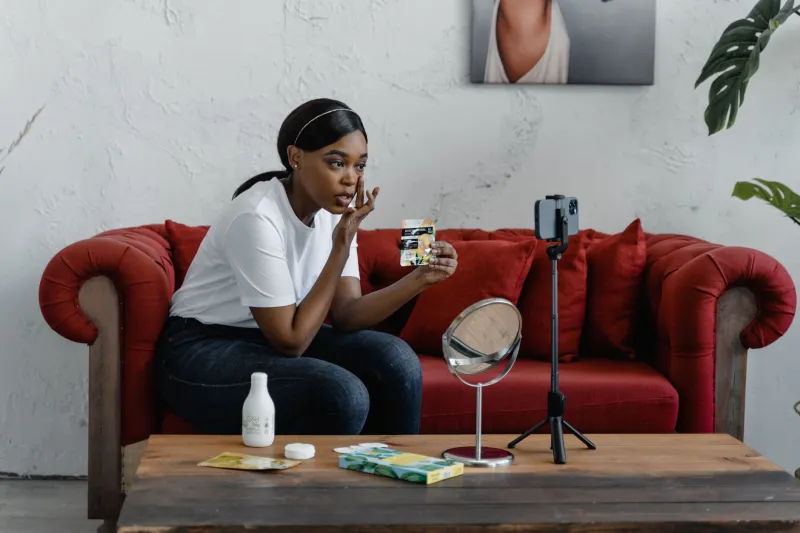
The commercial value of a strong unboxing sequence extends well beyond the individual consumer. When an experience is designed to produce emotional peaks at photographable moments, it generates content that functions as peer-to-peer advertising — arguably the most credible form of brand communication available.
Unboxing videos on YouTube and TikTok consistently outperform standard product review content in watch time and engagement. The format satisfies the same anticipation-reward loop in the viewer that the original consumer experienced. This means a well-designed unboxing sequence effectively doubles its reach: it converts the buyer and influences the audience watching the buyer.
For beauty brands investing in packaging design, the question worth asking at each design decision point is not only "Does this protect the product?" but also "Does this moment read on camera?" Tissue paper that rustles audibly, ribbon pulls that photograph elegantly, interior color reveals that contrast sharply — these are not superficial details. They are functional components of a social distribution strategy.
Designing the Sequence With Intention
Building an effective unboxing sequence begins with mapping the consumer journey from the moment of delivery to the moment of first product use. Each physical touchpoint along that path should be evaluated against two criteria: the emotional signal it sends and the conversion behavior it is designed to support.
Brands entering the design process for the first time — or revisiting an existing packaging system — benefit from physically prototyping and filming the unboxing sequence before committing to production. What feels considered in the hand does not always translate to what reads as considered on screen. The two perspectives must be reconciled.
Supplier partnerships are equally important. US-based beauty brands sourcing packaging components should prioritize vendors who can speak to both structural integrity and experiential design — suppliers who understand that the inside of a box lid is as commercially important as the outside.
The brands that are winning on retention and social reach right now are not necessarily the ones with the largest marketing budgets. They are the ones that have recognized packaging as a conversion tool and invested in sequencing it with the same rigor they apply to their product formulations. The reveal, it turns out, is part of the product.