Packaging as Content: The Case for Building Your Beauty Brand's Visual Identity Around the Screen, Not the Shelf
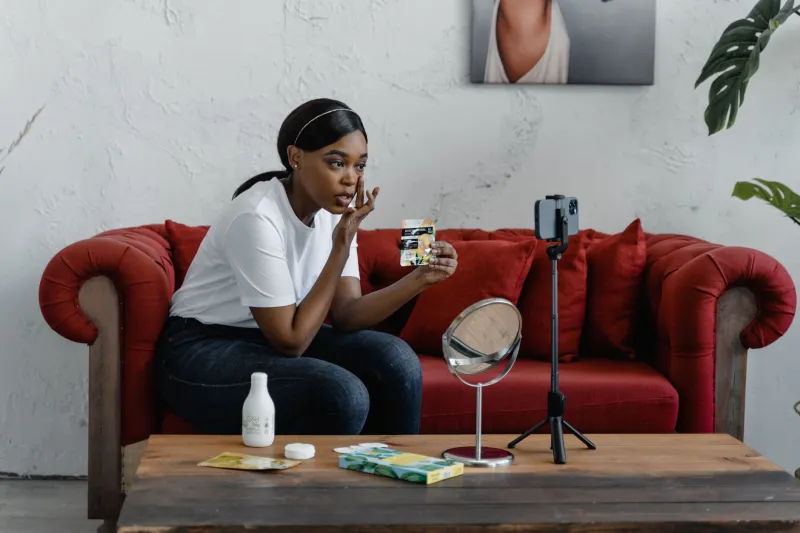
There is a question that every beauty brand's packaging design process should begin with, and very few are asking it first: How does this look on a phone screen at 1080 pixels?
Not: How does this read from three feet away on a Sephora gondola? Not: How does this feel in the hand? Those considerations matter — but they are no longer the primary design brief. The most important surface your packaging will ever appear on is a six-inch display, viewed for an average of three seconds before a consumer decides whether to pause, engage, or scroll past.
This is the reality of beauty brand marketing in 2024, and the packaging industry has been slow to fully internalize it.
The New Point of Sale Is a Feed
Consumer discovery in the beauty category has migrated decisively to social platforms. A 2023 survey by Statista found that 49 percent of US Gen Z and millennial consumers discovered new beauty products through social media content, outpacing both traditional advertising and in-store browsing by a significant margin. TikTok, in particular, has become a product launch mechanism more powerful than any endcap display or magazine spread.
What this means for packaging design is not a minor adjustment — it is a fundamental reorientation of priorities. When a product is introduced to a potential customer through an influencer's flat lay, an unboxing video, or a 15-second TikTok review, the packaging is doing the work of a storefront, a salesperson, and a brand ambassador simultaneously. It must perform in compressed time, in variable lighting conditions, and at resolutions that will mercilessly expose any design element that lacks sufficient contrast or visual clarity.
Brands that design primarily for physical retail and treat digital as a secondary consideration are, in effect, designing for a channel that now represents a minority of their consumer touchpoints.
What "Digital-First" Actually Means in Practice
Adopting a digital-first packaging design strategy does not mean abandoning the principles of good industrial design or producing packaging that performs poorly in person. It means establishing a hierarchy of design decisions in which screen legibility, photographic performance, and content-creation utility are weighted as primary criteria.
In concrete terms, this manifests in several ways.
Contrast and legibility at reduced scale. A logo or wordmark that reads clearly on a full-size package may become illegible when the package appears as a secondary element in an influencer's background. Digital-first design requires testing brand elements at thumbnail scale and in the context of a photographed environment, not just in isolation.
Photogenic material choices. Certain finishes photograph dramatically better than others. Matte surfaces tend to reduce glare and render colors more accurately under artificial lighting — the condition under which most unboxing content is filmed. Glossy surfaces can produce beautiful imagery under controlled conditions but are unforgiving in amateur lighting setups. Packaging designers who understand how materials interact with smartphone cameras and ring lights are producing work that is inherently more content-ready.
Distinctive silhouettes. In a social media feed populated with hundreds of beauty products, a distinctive structural silhouette is one of the most reliable ways to achieve recognition. Unusual shapes, asymmetrical forms, and unexpected proportions create visual memorability that flat graphic design alone cannot achieve. The Drunk Elephant approach — bold, primary colors in chunky, utilitarian-looking containers — is a masterclass in silhouette-driven brand recognition that photographs consistently across every context.
The Unboxing Video as a Design Specification
The unboxing video format has matured from a novelty into a genre with its own established conventions and audience expectations. Viewers of unboxing content are evaluating the packaging experience in real time: the resistance of a closure, the sound of a magnetic snap, the reveal of a product nestled in custom-cut foam. These are sensory details that translate into emotional responses on screen, and they are entirely within the control of the packaging designer.
Brands that have internalized this understanding are producing packaging that is essentially pre-optimized for content creation. They are thinking about the sequence of reveals, the sounds that packaging makes when opened, and the visual payoff of the final product reveal. They are, in effect, co-directing the unboxing videos that their packaging will inevitably star in.
This is not a cynical calculation — it is a recognition that the consumer's experience of a product now begins before they ever hold it, in the moment they watch someone else open it for the first time.
Influencer Partnerships Begin in the Design Room
One underappreciated consequence of the social-media-first beauty landscape is that packaging design has become a factor in influencer partnership decisions. Creators with large followings are selective about the products they feature organically, and packaging that photographs well, tells a compelling visual story, and generates positive audience response is more likely to be featured without paid incentive.
Several emerging US beauty brands have reported that unsolicited influencer coverage spiked after deliberate packaging redesigns that prioritized photogenic qualities. The packaging itself became a reason for creators to engage with the product — not because they were compensated to do so, but because the visual content it generated performed well with their audiences.
For brands allocating marketing budgets, this represents a meaningful return on packaging investment that is rarely captured in traditional ROI calculations.
Actionable Principles for the Digital-First Design Brief
For brand managers and packaging designers ready to make this strategic shift, several principles are worth adopting immediately.
First, photograph every packaging concept before it enters production — not in a studio, but on a smartphone, in natural and artificial light, against backgrounds that approximate how it will appear in consumer-generated content. Let those images inform final design decisions.
Second, consider the brand's social media grid as a design constraint. Packaging colors and finishes should be chosen with an understanding of how they will read in a curated feed context, not just as standalone objects.
Third, invest in packaging elements that create shareable moments — a custom-printed interior, an unexpected material detail, a structural feature that rewards the person who discovers it. These details cost relatively little to produce but generate disproportionate content value.
Finally, involve content creators in the packaging development process. Not as an afterthought, but as stakeholders whose practical experience of photographing and filming products can meaningfully inform design decisions before tooling is committed.
The brands that treat packaging as a content asset — as deliberately as they treat any other element of their marketing mix — are the ones building durable equity in a media landscape that rewards visual intelligence above almost everything else. The shelf still matters. But the screen matters more.