From Shelf to Share: Why Beauty Packaging Is Now a Social Commerce Engine
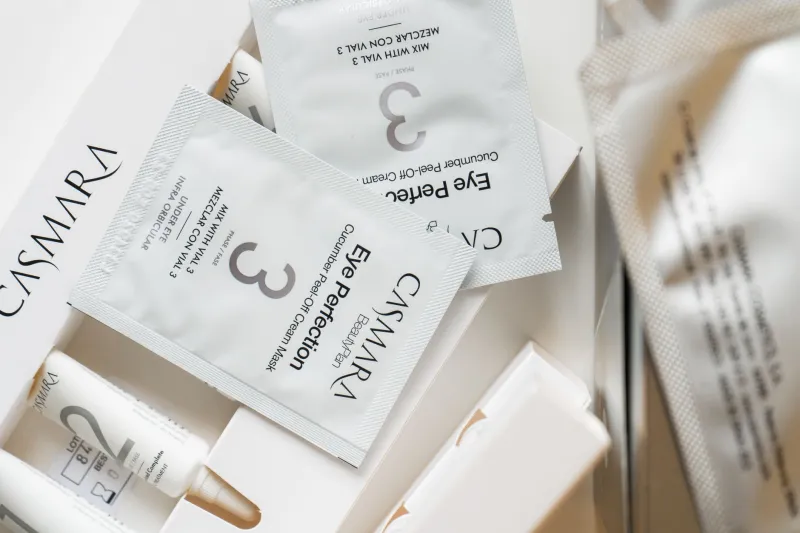
For decades, cosmetics packaging was evaluated almost exclusively by what it accomplished at the point of sale. Did the color command attention? Did the form factor convey luxury? Did the logo read clearly under fluorescent retail lighting? Those benchmarks have not disappeared—but they have been joined by an entirely new set of performance criteria driven by the social commerce economy.
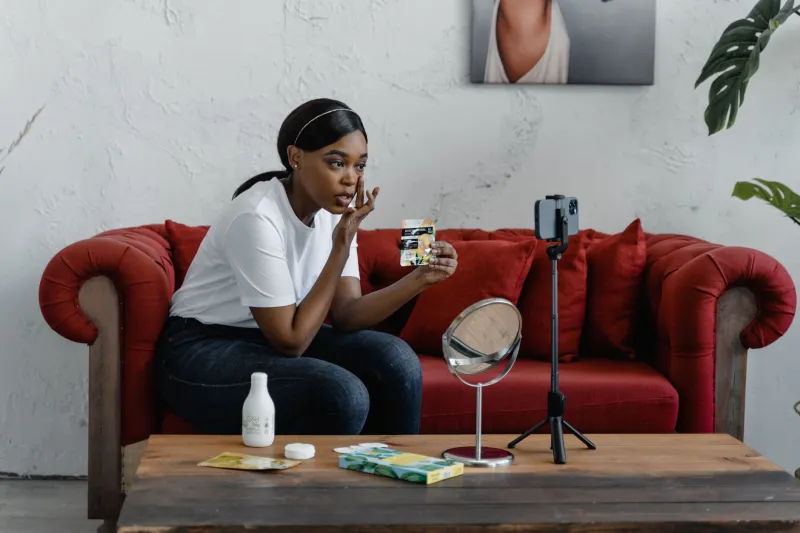
Today, a beauty product's packaging must earn its keep twice: first in the hands of a retailer or a direct-to-consumer fulfillment center, and second on the screens of millions of potential customers scrolling through TikTok, Instagram Reels, and YouTube Shorts. The unboxing moment has become a distinct commercial event, and brands that design for it deliberately are seeing measurable returns.
The Unboxing Moment as a Brand Touchpoint
The term "unboxing" entered mainstream vocabulary roughly a decade ago, but its commercial significance has matured considerably since the early days of YouTube haul videos. What was once an organic consumer behavior has evolved into a structured content format that beauty brands actively engineer. According to data from Google Trends, searches related to beauty unboxing content have remained consistently elevated in the United States since 2018, with periodic spikes corresponding to major product launches.
The unboxing moment represents a brand's opportunity to deliver a sensory narrative without a store associate, a point-of-sale display, or a paid media placement. The sequence in which layers are revealed, the sound a magnetic closure makes, the scent of tissue paper treated with a signature fragrance—each element is a scripted beat in a performance that a consumer will often choose to record and share.
Brands that understand this dynamic treat their outer shipping carton as the opening scene of that performance, not merely a protective vessel.
Psychological Triggers That Drive User-Generated Content
Not every beautiful package inspires a consumer to reach for their phone. The designs that reliably generate user-generated content tend to activate specific psychological responses that packaging designers and brand strategists are increasingly studying with precision.
Surprise and novelty rank among the most powerful triggers. When a consumer encounters an unexpected structural detail—a drawer-style inner tray, a foil-stamped message hidden beneath a flap, a seed-paper insert that can be planted after purchase—the novelty registers as worth documenting. Brands such as Glossier built early cult followings in part because their millennial-pink bubble pouches felt genuinely different from anything else arriving in a mailbox at the time.
Aesthetic coherence is equally critical. Packaging that photographs well tends to feature high contrast, intentional negative space, and a limited, harmonious color palette. Consumers are sophisticated enough to recognize when a brand has invested in visual consistency across every component of the unboxing experience, and that recognition translates into a willingness to share.
Personalization and perceived exclusivity also drive sharing behavior. Handwritten thank-you notes, limited-edition seasonal wrapping, and name-printed inserts signal to a consumer that their purchase was not anonymous—and that sense of being seen is something people want to broadcast.
Case Studies in Packaging-Led Social Commerce Growth
Several US-based beauty brands offer instructive examples of how deliberate packaging investment translates into social commerce performance.
Rare Beauty, the brand founded by Selena Gomez, launched in 2020 with packaging that was clearly designed for a generation of visual communicators. The soft-touch matte finishes, the rounded silhouettes, and the consistent dusty-rose and white palette made every product instantly recognizable in flat-lay photography and video content alike. The brand's direct-to-consumer sales benefited substantially from the volume of organic content that consumers created without any paid incentive.
Fenty Beauty, which disrupted the foundation category at launch with its 40-shade range, paired that product innovation with packaging that read as fashion-forward and gender-neutral—qualities that resonated with a broad, visually engaged audience. The brand's unboxing content proliferated organically across platforms, extending the reach of its paid campaigns significantly.
On the indie end of the spectrum, smaller US brands such as Tower 28 and Ilia Beauty have demonstrated that considered packaging—clean typography, sustainable materials, and cohesive color systems—can compete for social commerce attention even without celebrity association or major media budgets.
Metrics Beauty Brands Should Track
Designing for social commerce requires a corresponding shift in how packaging ROI is measured. The traditional metrics—unit cost, material waste, shelf velocity—remain relevant, but they tell an incomplete story in the current environment.
Brands investing in social commerce packaging should monitor the following:
- User-generated content volume: Track the number of posts, Reels, and TikTok videos that feature your packaging organically. Tools such as Mention, Brandwatch, and native platform analytics can surface this data.
- Earned media value (EMV): Assign a dollar equivalent to organic content featuring your packaging based on the estimated cost of equivalent paid placements. This figure helps justify packaging investment to finance stakeholders.
- Conversion rate from social referral traffic: Isolate the conversion rate of visitors arriving at your direct-to-consumer site from social platforms. If packaging-driven content is performing, this cohort should convert at a meaningful rate.
- Average order value among UGC-influenced customers: Consumers who discover a brand through organic unboxing content often arrive with higher purchase intent and lower acquisition costs than those reached through paid channels.
- Return rate and customer lifetime value: Packaging that delivers a memorable experience tends to reduce buyer's remorse and increase repeat purchase rates—both of which affect long-term profitability.
Designing With the Camera in Mind
For beauty brand founders and packaging directors preparing for a new product launch or a brand refresh, the practical implication of the social commerce era is straightforward: every packaging decision should be evaluated through the lens of a smartphone camera.
This does not mean abandoning tactile or structural quality—quite the opposite. It means ensuring that the qualities that make a package feel extraordinary in person also translate compellingly to a two-dimensional screen. Embossing, foil, and soft-touch lamination all photograph beautifully when the color palette and lighting conditions are considered during the design phase.
It also means collaborating closely with fulfillment partners to ensure that the unboxing sequence—the order in which components are packed, the condition in which they arrive—is as consistent as the design itself. A stunning package that arrives crushed or carelessly assembled undermines the entire investment.
The Strategic Imperative
The beauty industry in the United States is navigating a commercial environment in which organic social reach is increasingly difficult and paid media costs continue to rise. In that context, packaging that consistently generates user-created content represents one of the most efficient marketing assets a brand can develop.
The brands winning the social commerce era are not simply those with the most attractive products. They are the brands that have recognized packaging as a strategic communication channel—one that reaches potential customers at the moment of maximum authenticity, through the voice of a peer rather than an advertiser.
For packaging designers, brand strategists, and beauty founders, the question is no longer whether social commerce should influence packaging decisions. The question is how quickly those decisions can be aligned with the realities of how consumers discover, evaluate, and ultimately purchase beauty products in 2024 and beyond.