Green Without Compromise: How Luxury Beauty Labels Are Reinventing the Art of Sustainable Packaging
For decades, luxury beauty packaging operated under a singular mandate: project opulence at every touchpoint. Thick glass flacons, gold-foil stamping, and multi-layer secondary boxes were the language of prestige. Today, that vocabulary is being rewritten — not abandoned, but thoughtfully reimagined — as eco-conscious consumers demand that the brands they admire reflect the values they hold.
The shift is not merely cosmetic. According to a 2023 McKinsey & Company report, nearly 60 percent of US consumers say sustainability credentials meaningfully influence their purchasing decisions in the beauty category. For premium brands, whose customers already expect exceptional quality, that expectation now extends to the environmental footprint of every jar, tube, and carton.
The Materials Redefining Premium Packaging
The most significant innovation happening at the intersection of luxury and sustainability is in materials science. Brands are moving beyond recycled paperboard — once considered the ceiling of eco-friendly packaging — into genuinely novel territory.
Mycelium and Bio-Based Composites Mushroom leather, or mycelium composite, has emerged as a compelling alternative to synthetic plastics and conventional foam inserts. Grown from agricultural waste and fungal networks, mycelium can be molded into custom shapes, offering protective cushioning for fragile glass components while remaining fully compostable. Several high-end skincare houses in California and New York have begun piloting mycelium-based inner packaging for their gift sets, citing both the material's structural integrity and its compelling sustainability narrative.
Ocean-Bound Plastics Rather than eliminating plastic entirely — a transition that remains technically and economically complex — some brands are redirecting post-consumer ocean-bound plastics into their packaging supply chains. This approach intercepts plastic waste before it reaches waterways and transforms it into usable resin for caps, pumps, and secondary containers. The aesthetic result is a slightly matte, textured finish that many luxury brands have chosen to celebrate rather than conceal, turning the material's origin story into a design feature.
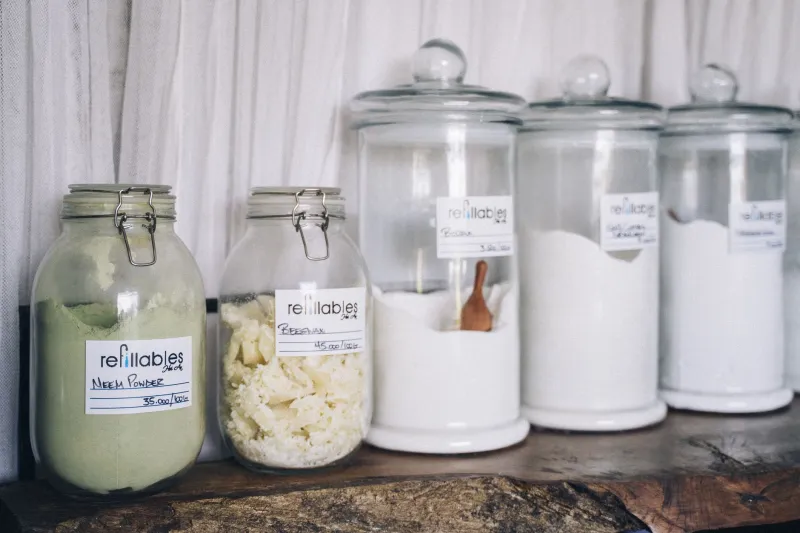
Refillable Architectures Perhaps the most structurally significant trend is the refillable system — a model that challenges the disposable nature of traditional beauty packaging at its core. US-based prestige labels are increasingly designing primary containers as permanent objects: weighty, beautifully finished vessels meant to occupy a vanity for years. Replacement product arrives in minimal, lightweight refill cartridges that slot directly into the original housing. The result is a dramatic reduction in material consumption without asking the consumer to sacrifice the tactile luxury of a well-crafted container.
Case Studies in Conscious Redesign
Chanel's Refillable Fragrance Initiative Chanel's N°1 de Chanel line represents one of the most visible commitments to sustainable luxury in recent memory. The collection — which spans skincare, makeup, and fragrance — is formulated with up to 97 percent natural-origin ingredients and housed in packaging made with up to 97 percent natural, recycled, or bio-sourced materials. The brand's refillable lip and cheek balm compact has become a reference point for how heritage houses can modernize without diluting brand equity.
Kjaer Weis and the Refill Economy Denmark-born, US-embraced Kjaer Weis built its entire brand identity around refillable metal compacts. The brand's iconic matte silver cases are designed to last a lifetime, with organic makeup refills sold separately in compostable cardboard. This model has resonated strongly with American consumers who associate longevity with quality — a cultural value the brand has leveraged effectively in its marketing.
Credo Beauty's Supplier Standards As a US-based clean beauty retailer, Credo Beauty has implemented some of the most rigorous packaging standards in the domestic market. Their Sustainable Packaging Guidelines require brand partners to assess and reduce the environmental impact of all packaging components, pushing suppliers to innovate or risk losing shelf placement. This retailer-driven pressure has accelerated development timelines for sustainable solutions across the supplier ecosystem.
What This Means for Packaging Suppliers
The implications for packaging manufacturers and suppliers are profound. Brands are no longer willing to accept a binary choice between sustainable and premium. Suppliers who can deliver both — who understand the structural requirements of refillable systems, the sourcing chains for certified recycled materials, and the finishing techniques that maintain a luxury hand-feel on bio-based substrates — will hold a decisive competitive advantage.
For US-based packaging suppliers in particular, proximity to domestic brands navigating these transitions is an asset. Brands increasingly value shorter supply chains not only for carbon-reduction reasons but for the agility they offer when iterating on new sustainable formats.
The certification landscape is also evolving. FSC certification for paper components, PCR (post-consumer recycled) content verification, and third-party compostability testing are becoming table-stakes requirements in supplier RFPs from premium beauty brands. Suppliers investing in these credentials now are positioning themselves for the contracts that will define the next decade of luxury beauty packaging.
The Aesthetic Imperative
It bears emphasizing that sustainability alone does not sell luxury. The most successful eco-forward packaging redesigns succeed because they are also beautiful. The brands leading this movement understand that a refillable compact must feel as satisfying to close as its predecessor. An ocean-bound plastic bottle must have a silhouette that commands attention on a bathroom shelf.
This is where the artistry of packaging design remains indispensable. Embossing, soft-touch coatings, and precision-machined closures can all be executed on sustainable substrates. The challenge — and the opportunity — for designers and suppliers alike is to master these techniques in the context of materials that behave differently than conventional plastics and virgin glass.
The luxury beauty brands that will define the next era of the category are those that treat sustainability not as a constraint but as a design brief: a set of parameters within which exceptional creativity can flourish. For packaging professionals, that creative challenge has never been more consequential — or more compelling.