See Through the Bottle: How Transparent Packaging Is Becoming Fragrance's Most Powerful Trust Signal
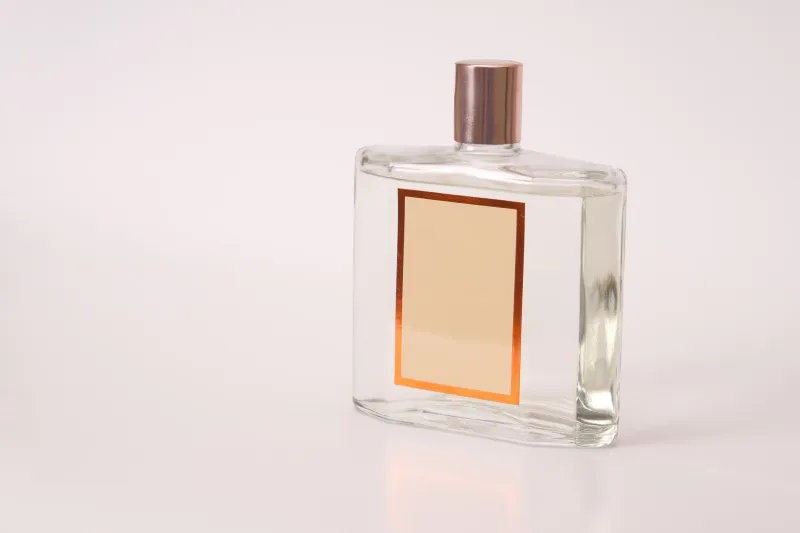
For most of the twentieth century, the dark glass fragrance bottle was an almost sacred design convention. Amber, cobalt, and onyx vessels were chosen for practical reasons—UV protection, oxidation prevention—but they acquired a secondary meaning over time: opacity signaled mystery, exclusivity, and the kind of luxury that did not need to explain itself. The bottle was a closed door, and consumers trusted what was behind it.
That logic is being quietly dismantled.
Across the US beauty market, a measurable number of fragrance and personal care brands are pivoting toward transparent and translucent packaging that puts the actual product on display. The liquid inside—its color, its viscosity, its suspended botanicals or shimmer—has become a deliberate design element rather than a hidden asset. What was once considered a technical limitation is now being positioned as a brand strength.
Understanding why this is happening requires examining two forces that have converged at an inconvenient moment for traditional fragrance packaging: a crisis of consumer trust and a transformation in how beauty products are discovered.
The Greenwashing Backlash Is Reshaping Packaging Philosophy
US consumers have grown deeply skeptical of environmental claims made by beauty brands. Studies conducted by third-party sustainability auditors have repeatedly found that a substantial portion of "clean" and "natural" beauty products carry marketing language that outpaces their actual formulation credentials. This skepticism has produced an unexpected design consequence: consumers are beginning to treat visual transparency as a proxy for ingredient transparency.
When a brand allows its product to be seen—when the amber liquid inside a serum bottle or the pale botanical suspension inside a facial oil is genuinely visible—it communicates something that a printed ingredient list often cannot. It says: we have nothing to conceal. For brands that have built their identity around clean formulations, natural ingredient sourcing, or minimal processing, transparent packaging functions as a form of proof.
This is the fragrance packaging paradox in its clearest expression. Brands that once relied on opaque vessels to project prestige are now finding that the same opacity reads as evasiveness to a generation of consumers trained to question what they cannot see.
When the Liquid Becomes the Visual Identity
The design implications of this shift are significant and, for many packaging teams, genuinely unfamiliar. When a brand commits to a transparent vessel, the formulation itself must perform aesthetically. Color consistency across production batches becomes a packaging concern, not merely a quality control issue. The behavior of suspended particles, botanical fragments, or emulsified layers must be accounted for in the visual design of the product.
Some brands have leaned into this challenge with considerable sophistication. Layered formulations—where distinct phases separate visibly in the bottle—have become a design feature rather than a stability flaw to be engineered away. The visual drama of a bifurcated serum or a gradient-tinted eau de parfum creates a shelf presence that no printed label can fully replicate.
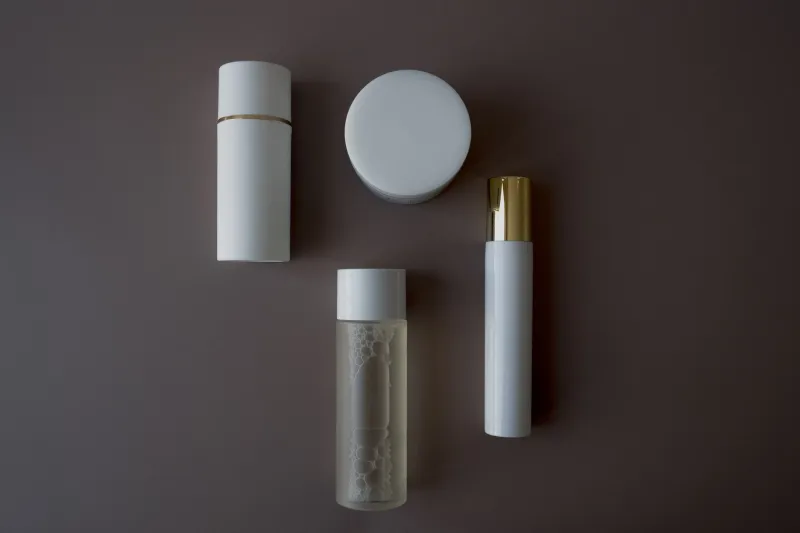
Translucent packaging occupies an interesting middle position in this spectrum. Frosted glass, matte-finish PET, and semi-opaque bioplastics allow brands to suggest what is inside without full disclosure—a useful tool for formulations whose color may shift during transit or storage, or for brands that want to retain some visual mystery while still communicating openness.
The Technical Obstacles Brands Are Working to Solve
For all its appeal as a brand strategy, transparent packaging introduces real engineering challenges that suppliers and packaging teams are actively working to address.
Light degradation remains the most significant concern. Many fragrance compounds and active skincare ingredients are sensitive to UV exposure, and the dark glass convention existed for sound scientific reasons. The current generation of transparent packaging solutions relies on UV-inhibiting coatings applied to glass or plastic, borosilicate formulations with inherent UV resistance, and secondary packaging—outer cartons, sleeves, or shipping materials—that provides light protection during transit while allowing the bottle itself to be fully transparent at point of sale and in the consumer's home.
Material innovation is also accelerating in response to demand. Several US-based packaging suppliers are now offering transparent options in post-consumer recycled PET and bio-based polymers that carry lower carbon footprints than virgin glass while maintaining the optical clarity that the trend requires. For brands navigating both the transparency trend and sustainability commitments, these materials represent a meaningful convergence.
Shelf Presence in the Age of Screen Commerce
The social commerce dimension of this trend cannot be separated from its design logic. A transparent fragrance bottle photographed against a clean background—or held in natural light by a beauty creator—generates a visual quality that opaque packaging simply cannot match. The liquid catches light. The color reads clearly on a phone screen. The product looks, in a word, honest.
For brands selling through direct-to-consumer channels, Instagram storefronts, and TikTok Shop, this photographic quality is not incidental. It is a packaging requirement. The US beauty consumer increasingly encounters products first on a four-inch screen, and the packaging must perform in that environment before it ever performs on a physical shelf.
Retailers have taken notice as well. Several prestige US beauty retailers have reported that transparent and translucent packaging formats perform above average in online category browsing, where thumbnail visibility and color differentiation drive click-through rates.
What This Means for Brands Considering the Shift
For beauty brand leaders evaluating whether to move toward transparent packaging, the decision involves more than aesthetics. It requires an honest assessment of whether the formulation is visually stable, whether the brand's ingredient story is strong enough to withstand visibility, and whether the supply chain can support the technical requirements of UV protection without sacrificing the transparency effect.
Brands that answer those questions affirmatively are finding that transparent packaging opens a genuine conversation with consumers—one that opaque bottles, however beautifully designed, were never structured to have. In a market where trust is the scarcest commodity, the willingness to show what is inside may be the most persuasive packaging decision a beauty brand can make.