Beyond the Box: How Direct-to-Consumer Beauty Brands Are Rewriting the Rules of Packaging Hierarchy

For decades, the beauty industry operated on a single, unchallenged premise: the box sells the bottle. Outer cartons, elaborate inserts, and layers of tissue paper were understood to be non-negotiable elements of the premium beauty experience. Then the direct-to-consumer model arrived and quietly dismantled that logic—not through a dramatic manifesto, but through a series of pragmatic, consumer-led decisions that have since proven extraordinarily effective.
Today, some of the most commercially successful beauty brands in the United States ship their products with minimal—or no—outer packaging whatsoever. What they have not done, however, is reduce investment in the primary vessel. If anything, the opposite is true.
The Economics of Eliminating the Middleman (and the Middlepackage)
When a beauty brand sells through a traditional retail channel, the outer carton performs a critical function: it competes on shelf. It must attract attention from three feet away, communicate brand positioning in under three seconds, and survive the handling demands of warehouse logistics. The carton is, in many respects, a marketing tool dressed as packaging.
In the DTC environment, that function evaporates. The consumer has already made a purchase decision before the product arrives at their door. The brand does not need to win a shelf battle—it needs to win a doorstep moment. This fundamental shift in context has prompted a reallocation of design investment that is both financially sensible and brand-strategically sound.
Consider what eliminating an outer carton actually saves. For a mid-volume DTC brand shipping 50,000 units annually, removing secondary packaging can reduce per-unit material costs by anywhere from $0.30 to $1.20 depending on complexity. Multiplied across volume, that figure becomes a meaningful budget line—one that can be redirected toward a more refined primary vessel, a better pump mechanism, or an elevated closure system.
The result is a packaging hierarchy that inverts the traditional model: less on the outside, more on the inside.
The Primary Vessel as Brand Ambassador
When a brand removes the carton, the bottle, tube, or jar assumes full responsibility for communicating identity. This is not a reduction in storytelling opportunity—it is a concentration of it.
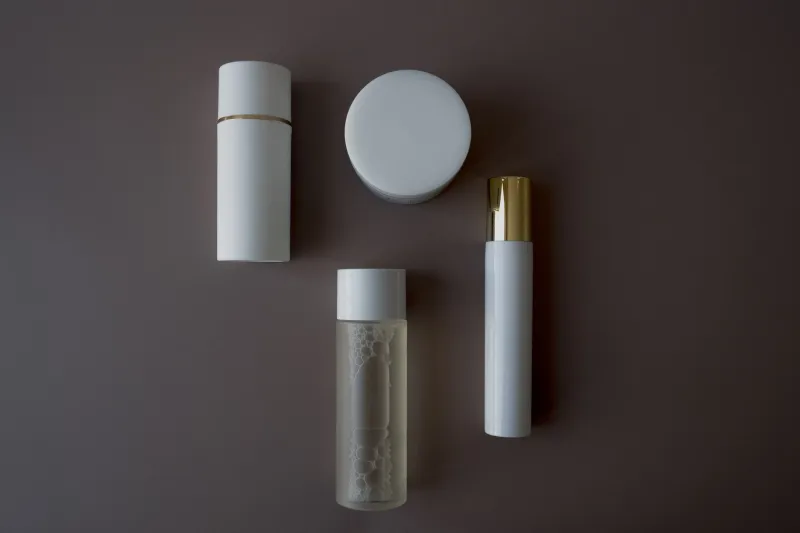
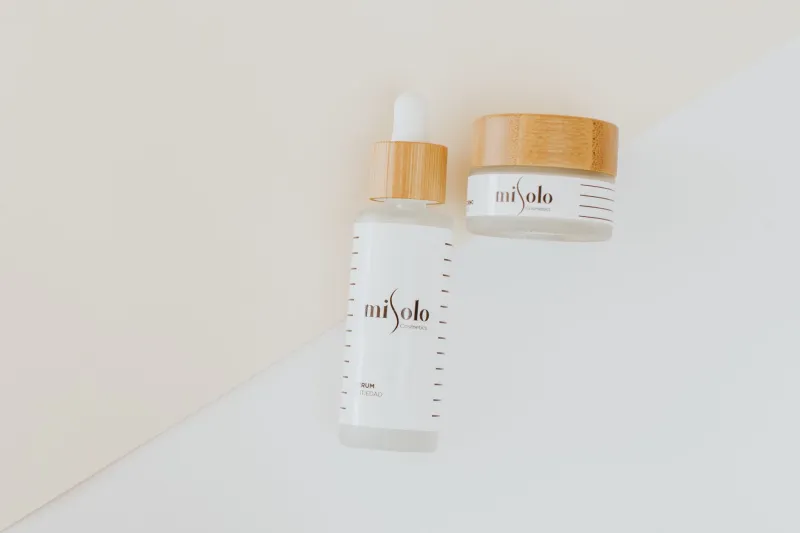
Several DTC brands have used this constraint to extraordinary effect. Skincare labels operating in the clean beauty space have introduced glass bottles with tactile embossing, minimalist typography applied directly to the vessel, and precision-engineered dropper assemblies that feel intentional in the hand. These are not cost-cutting measures. They are design decisions made possible by the budget freed from secondary packaging.
The emotional impact of this approach should not be underestimated. When a consumer opens a shipping mailer and encounters a single, beautifully considered bottle rather than a box containing a box containing a product, the experience is immediate and unmediated. There is no unwrapping ritual to dilute the moment—only the product itself, present and purposeful.
This directness creates a different kind of brand intimacy. The object in the consumer's hand is the brand, without translation.
Sustainable Credentials Without the Greenwashing
One significant benefit of reduced outer packaging is the environmental narrative it supports—and in the current US market, that narrative carries measurable commercial weight. Younger consumers, particularly those in the 25-to-40 demographic that drives DTC beauty growth, are increasingly skeptical of brands that claim sustainability credentials while shipping products encased in layers of virgin paperboard.
Eliminating secondary packaging is not a complete sustainability strategy, but it is a concrete, verifiable action that resonates with this audience in ways that abstract commitments to carbon neutrality often do not. Brands that communicate this reduction clearly—in their shipping confirmation emails, on their product pages, and through the physical experience of receiving an unboxed product—tend to earn higher trust scores among environmentally conscious consumers.
The key is authenticity. Brands that strip packaging purely to reduce cost but frame it as environmental leadership will eventually face scrutiny. Those that have genuinely restructured their packaging hierarchy around both consumer experience and material responsibility are building something more durable.
What Traditional Retailers Are Beginning to Understand
The lessons of DTC packaging hierarchy are not lost on the broader retail industry. Several prestige beauty brands with significant brick-and-mortar distribution have begun developing what might be called a dual-format packaging strategy: a fully boxed presentation for retail shelf placement and a de-boxed, vessel-forward configuration for their own e-commerce and DTC channels.
This approach requires more complex supply chain management but allows brands to optimize the packaging experience for each context rather than defaulting to a single format designed for the most demanding environment.
Retail buyers at major US specialty chains have also begun signaling openness to reduced outer packaging in categories where the product itself is visually compelling—a development that would have been unthinkable a decade ago. The DTC brands that pioneered vessel-forward design have, in effect, created new expectations that are now migrating upstream into traditional retail.
Designing for the Doorstep
For beauty brands evaluating their own packaging architecture, the DTC model offers a useful reframing. Rather than asking what the package needs to do on shelf, the more productive question may be: what does this package need to do when it arrives at someone's home?
The answers to that question—protect the product, communicate brand values, create a moment of genuine pleasure, and invite repeated use—tend to point toward investment in the primary vessel rather than the outer wrapper. They also tend to point toward materials and finishes that age well, that look considered on a bathroom shelf rather than cluttered, and that the consumer is proud to display rather than eager to discard.
In a market saturated with beauty options, the brands that understand this shift are not just reducing packaging. They are redesigning the entire relationship between consumer and product—and in doing so, they are building something that a well-designed carton never could: genuine, lasting loyalty.