Designed to Return: How Refillable Packaging Is Reshaping Beauty Brand Loyalty From the Ground Up

For decades, the beauty industry operated on a straightforward transactional model: a consumer empties a jar, discards it, and purchases an identical replacement. That cycle generated reliable revenue, but it also produced extraordinary amounts of single-use packaging waste—and offered brands almost no structural reason for a customer to feel differently about their second purchase than their first.
Refillable packaging systems are dismantling that model entirely. What has emerged in its place is a more architecturally sophisticated approach to product design, one in which the container itself becomes a durable asset and the refill becomes the recurring event that deepens brand engagement over time. The most successful iterations of this model are not simply environmentally motivated—they are commercially engineered, with packaging structures designed to make every return purchase feel like a deliberate, even pleasurable, upgrade.
The Engineering Behind the Experience
The functional challenge of refillable packaging is more demanding than it might initially appear. A container designed for multiple refill cycles must maintain structural integrity, hygienic performance, and aesthetic consistency across dozens of uses. It must accommodate a refill format—whether a pod, a cartridge, or a nested inner vessel—that fits precisely, seals securely, and releases cleanly. Any friction in that process erodes the consumer's willingness to participate.
Magnetic closure systems have emerged as one of the more elegant engineering solutions to this challenge. By replacing threaded caps or press-fit lids with rare-earth magnet mechanisms, brands can create a satisfying, tactile snap that signals correct placement without requiring fine motor precision or significant force. For premium skincare and fragrance applications, this mechanism also carries a sensory weight—the audible click and the smooth resistance of a magnetic seal communicate quality in a way that a standard screw cap cannot.
Nested container ecosystems take a different structural approach. Rather than designing a single outer vessel with an interchangeable inner component, these systems create a family of containers—compacts, jars, and tubes—that share a common dimensional language. Refills arrive in formats that slot into any vessel within the system, encouraging consumers to build a coordinated collection rather than maintain a single product. The result is a packaging architecture that rewards continued engagement: the more products a consumer adopts, the more cohesive and personalized their collection becomes.
Consumer Psychology and the Refill Barrier
Understanding why consumers resist—or embrace—refill programs is essential to designing packaging that actually converts. Research consistently identifies two primary friction points: perceived inconvenience and skepticism about value equivalence. If the refill process requires more effort than simply purchasing a new unit, most consumers will default to the replacement purchase. If the refill is priced only marginally below the original, the perceived savings fail to justify the behavioral shift.
Brands that have successfully scaled refill adoption tend to address both barriers through packaging design rather than marketing messaging alone. Convenience is engineered into the container: the refill pod should require no tools, no decanting, and no guesswork. Value is communicated through the permanence and quality of the primary vessel—when the outer container is constructed from weighted aluminum, polished acrylic, or resin-cast materials that feel genuinely luxurious, the consumer begins to perceive it as an object worth keeping. The refill then becomes not a cost-saving measure but a continuation of ownership.
This psychological reframing is significant. A consumer who views their compact as a permanent possession—something to be maintained rather than discarded—develops a relationship with the brand that transcends individual product performance. The packaging itself becomes a touchpoint in an ongoing brand narrative.
Case Patterns Worth Studying
Several structural patterns have proven effective across the US market, even without citing proprietary brand data.
The Premium Vessel with Cartridge Refill: A heavy outer container—typically aluminum or glass—houses a lightweight inner cartridge containing the active product. The cartridge is designed for single-use, but the vessel is built to last years. This model works particularly well for color cosmetics and concentrated skincare, where the product-to-packaging ratio is already weighted toward the formula.
The Subscription-Anchored Refill Program: Some brands have integrated refillable packaging directly into a subscription commerce model, shipping refill cartridges on a predetermined cadence. The packaging design in these programs prioritizes mail-safe construction and minimal outer carton waste, while the primary vessel remains in the consumer's possession indefinitely. The subscription mechanic removes the purchase decision friction entirely—the refill arrives before the consumer has consciously recognized the need.
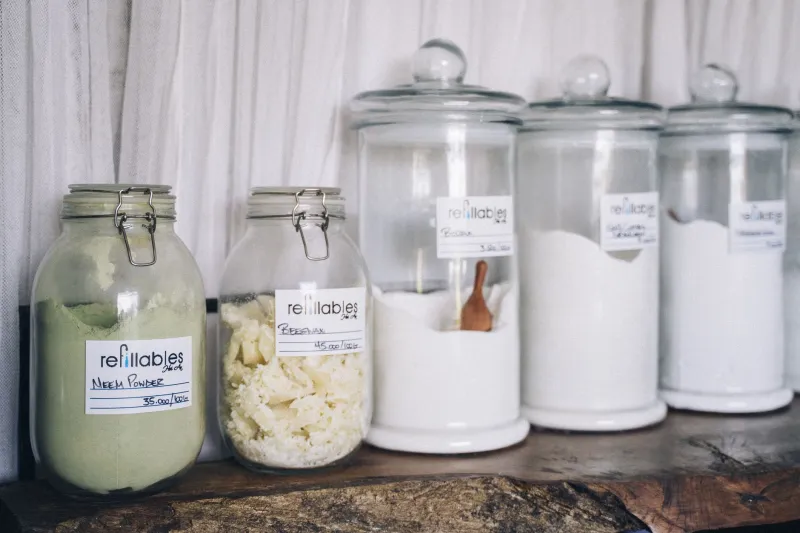
The In-Store Refill Station: A growing number of US specialty beauty retailers have introduced physical refill stations where consumers bring their primary vessels to be refilled from bulk product dispensers. This model demands a different set of packaging engineering standards—vessels must be compatible with dispensing equipment and must withstand repeated professional cleaning—but it also creates a retail touchpoint that is inherently experiential and community-oriented.
The Business Case Beyond Sustainability Messaging
For brand strategists and packaging directors evaluating refillable systems, the sustainability narrative—while genuine and increasingly expected by US consumers—is not the primary commercial argument. The more compelling case is structural.
Refill programs create recurring revenue with lower acquisition costs than new customer conversion. A consumer enrolled in a refill ecosystem has already demonstrated product loyalty; the packaging system simply formalizes and monetizes that loyalty. The lifetime value of a refill customer is demonstrably higher than that of a standard repurchase customer, because the barrier to switching brands increases with every refill cycle completed. A consumer who has invested in a premium outer vessel has a tangible reason to remain within that brand's ecosystem.
Additionally, refillable packaging systems generate rich behavioral data. Brands that manage their own refill programs—whether through direct-to-consumer channels or in-store stations—gain visibility into repurchase timing, product preference patterns, and geographic demand distribution that standard retail sell-through data rarely provides.
What the Packaging Must Communicate
For refillable systems to succeed at scale, the packaging must communicate its own logic clearly and without instruction. A consumer encountering a refill vessel for the first time should be able to intuit the mechanism, understand the value proposition, and feel confident in the process—all before reading a single line of copy.
This places significant demands on industrial design. Alignment guides, color-coded component systems, and tactile differentiation between the primary vessel and refill component all serve as non-verbal instructions that reduce hesitation. The best refillable packaging in the US market today functions almost as a self-explanatory system, one where the design itself is the user manual.
As circular economy expectations continue to intensify among American beauty consumers—particularly in urban markets and among the millennial and Gen Z demographics that now represent the industry's most influential purchasing cohort—refillable packaging will transition from a differentiating feature to a baseline expectation. Brands that build the engineering infrastructure now, while the category is still defined by early adopters, will enter that next phase with a structural advantage that is genuinely difficult to replicate.