Packaging Built for Everywhere: How the On-the-Go Beauty Routine Is Rewriting Product Design from the Outside In
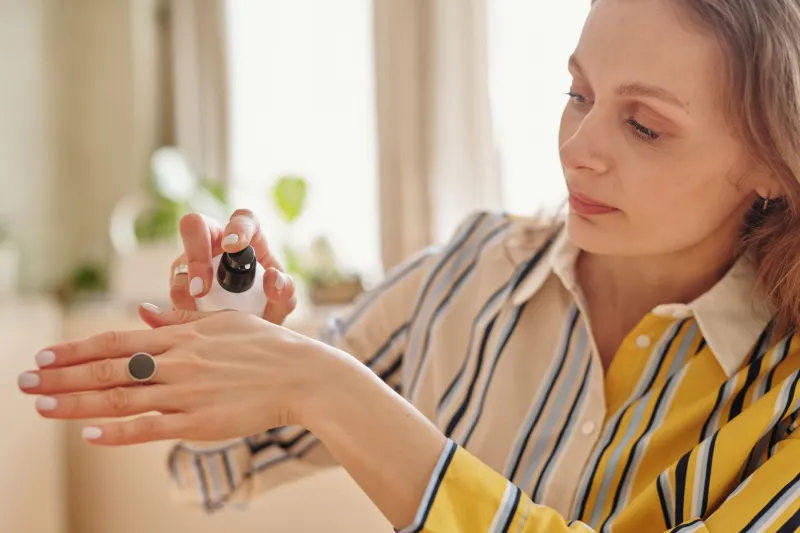
There is a particular kind of consumer behavior that beauty brands spent decades ignoring because it seemed peripheral to the core ritual of skincare: the bathroom. For generations, the assumption embedded in nearly every packaging decision—the pump size, the cap mechanism, the bottle weight, the label orientation—was that the product would be used at a vanity, unhurried, with both hands free and a mirror at eye level.
That assumption no longer holds.
Post-pandemic behavioral data from US consumer research firms has documented a sustained shift in where and when skincare routines actually happen. Morning SPF application in the car before a commute. Midday hydration mists reapplied between video calls. Lip treatments, eye drops, and portable retinol formulations tucked into desk drawers, gym bags, and glove compartments. The skincare routine has not contracted—in many demographic segments, it has expanded—but it has dispersed across the geography of daily life in ways that standard beauty packaging was never engineered to accommodate.
For brand strategists and packaging directors, this behavioral reality represents both a design challenge and a competitive differentiator. The brands that respond with genuine structural innovation will own a category position that is difficult to replicate.
The Functional Failures of Traditional Packaging in Mobile Contexts
To understand what on-the-go packaging must solve, it helps to catalog the specific ways conventional beauty packaging fails outside the bathroom.
Two-handed operation is perhaps the most pervasive problem. Pump bottles, jar lids, and twist-off caps all require both hands to operate safely—a significant limitation when a consumer is in a car, on a train, or navigating a crowded airport terminal. Dropper applicators, beloved in prestige skincare for their precision and perceived luxury, are functionally unusable without a stable surface and focused attention.
Spill risk compounds this problem. Many standard closures are not engineered for the orientation changes, pressure differentials, and temperature fluctuations that a product experiences in a handbag or carry-on luggage. The result is the familiar and frustrating discovery of a serum-soaked toiletry bag—an experience that erodes brand trust far more effectively than any negative review.
Size and weight present a third category of failure. Full-size product packaging is, almost by definition, optimized for shelf presence and home storage rather than portability. The generous proportions that signal value on a retail shelf become a liability when a consumer is deciding what fits in a crossbody bag.
Single-Handed Usability as a Design Standard
The most sophisticated brands approaching this challenge have begun treating single-handed operability not as a special feature but as a baseline design requirement—a reframing that has significant implications for the entire packaging development process.
Airless pump mechanisms with locking caps that can be disengaged with a thumb press represent one solution that has gained traction in the US prestige skincare segment. Squeeze tubes with precision nozzles and integrated flip-top closures offer a lower-cost alternative that performs well across a wide range of product viscosities. Solid formulations—balms, sticks, and pressed formats—eliminate the mechanical complexity of liquid dispensing entirely, a design approach that several indie beauty brands have leveraged into a distinct market identity.
Haptic design—the tactile engineering of how a package feels in the hand—has become a more explicit consideration in this context. Ergonomic contouring, non-slip surface textures, and weight distribution that places the center of gravity in the palm rather than the top of the bottle all contribute to usability in motion. These are decisions that require collaboration between industrial designers and packaging engineers at a level of specificity that many beauty brands have historically reserved only for hero flagship products.
Modular Systems and the Curated On-the-Go Collection
Beyond individual product redesign, a more ambitious response to the mobility trend involves the development of modular packaging systems—coordinated formats that allow consumers to assemble personalized travel collections from a brand's full product range without purchasing separate travel sizes.
This approach addresses a genuine consumer frustration. Standard travel sizes are often formulated differently from full-size products, packaged with less care, and positioned as loss leaders rather than premium experiences. The consumer who has invested in a skincare regimen does not want a degraded version of that regimen when she travels—she wants the same products in a format that fits her life.
Modular systems answer this by standardizing container dimensions across a product line so that a curated selection of minis, refillable pods, or stackable units can be organized into a cohesive travel kit. Some brands have introduced branded organizational pouches or magnetic cases designed to hold these modular components, creating a secondary product category that deepens consumer engagement while solving a real functional problem.
From a retail and e-commerce perspective, modular systems also create compelling bundle opportunities. A brand that sells a coordinated four-piece travel system as a single SKU captures a higher average order value while delivering a packaging experience that reinforces brand coherence.
The TSA Factor and the Regulatory Design Brief
For US consumers who travel by air with any regularity, the TSA's 3.4-ounce liquid rule functions as an unofficial design brief for travel beauty packaging. Brands that engineer their portable formats specifically around this constraint—and communicate that compliance clearly on the packaging—remove a meaningful point of friction from the purchase decision.
This is more than a practical consideration. For a consumer standing in a security line, the knowledge that her carefully assembled skincare kit will clear the checkpoint without incident is a form of brand reliability. Packaging that is visibly, legibly compliant with travel regulations communicates that the brand understands how she actually lives.
Designing for Life in Motion
The broader implication of this trend for beauty brand strategy is a shift in the foundational design question. The old question was: how does this packaging perform on the shelf and in the bathroom? The new question is: how does this packaging perform in a bag, in a car, in an office, and on a plane?
Brands that answer the new question well will find that portability is not a niche concern—it is a mainstream expectation from a consumer base whose daily life has permanently expanded beyond the spaces that traditional beauty packaging was built to serve.